How to Create a Backyard Pool Area
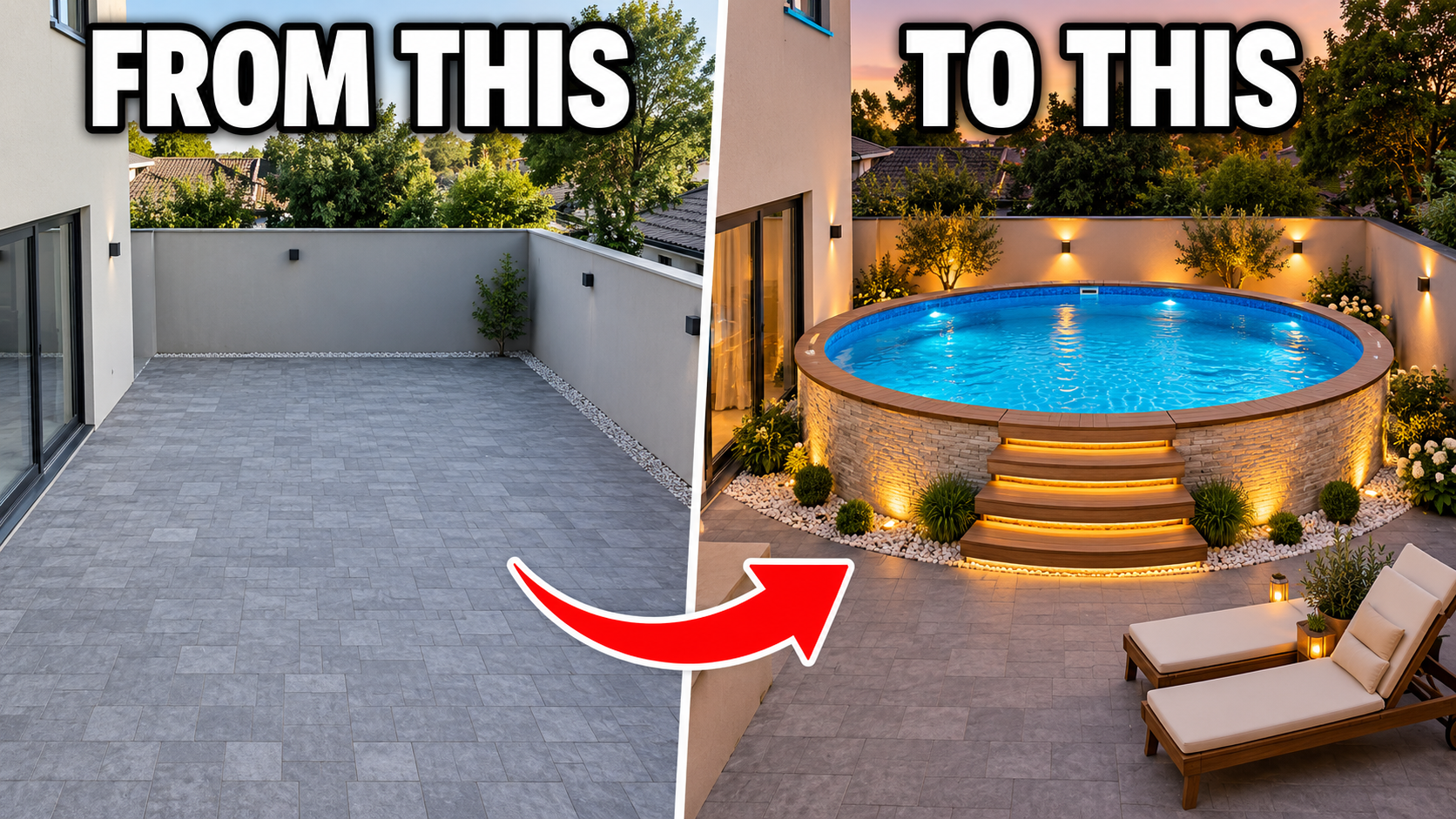
This video shows a backyard pool transformation, from an empty patio to a finished relaxation space. It speeds through construction and leaves out essential structural and installation details. Use it as design inspiration, not as a complete pool-building guide.
1. Plan the layout.
Choose where the pool, entrance steps, seating, and surrounding plants will go. Allow enough space to walk around the pool and access its equipment.
2. Check the base.
Before starting, confirm that the ground or patio can support the filled pool. The surface must meet the pool system’s installation requirements. Do not assume an existing patio is suitable.
3. Establish the circular shape.
In the video, blocks are arranged in a circle to mark the pool’s outline. For a real project, use a purpose-built pool system or a professionally designed structure.
4. Build the pool walls.
The video adds several rows of blocks to create the raised sides. Simply stacking ordinary blocks is not a safe way to contain pool water. Any masonry pool needs an appropriate structural design.
5. Prepare the entrance.
Steps are positioned at the front. Real access steps must be stable, slip-resistant, and suitable for the pool’s height. Provide a safe way to enter and exit the water.
6. Install the liner.
A blue sheet is spread across the bottom and up the sides. In a working pool, use a compatible pool liner with the specified protective underlay and fixing system—not an ordinary tarpaulin.
7. Finish the edges and steps.
The video adds wood-look surfaces around the rim and over the entrance steps. Choose materials suitable for wet outdoor conditions, with secure fixings and smooth edges.
8. Add decorative gravel.
Light-colored gravel is spread around the pool and leveled with a rake. Keep loose stones away from the pool interior and preserve access to drains and equipment.
9. Create a walking path.
Paving slabs are placed through the gravel to form a route to the steps. Each slab should sit firmly on a properly prepared base without rocking.
10. Add plants.
Small shrubs and flowering plants soften the surrounding space. Leave room for maintenance and keep plants clear of the entrance and equipment.
11. Install the operating equipment.
This essential stage is not shown clearly in the video. A working pool needs suitable filtration, circulation, and water treatment. Have electrical equipment installed according to applicable requirements.
12. Fill and check.
Once the installation is complete, follow the pool manufacturer’s filling procedure. Check for leaks and movement, and prepare the water properly before anyone swims.
13. Arrange the seating and lighting.
Place outdoor loungers beside the pool while keeping the walkway clear. Use lighting rated for its location, with electrical components safely installed away from the water.
14. Complete the safety setup.
Before use, meet local requirements for pool barriers and controlled access. Decorative steps and landscaping do not replace these protections.
The finished design combines a raised circular pool, pale gravel, greenery, comfortable seating, and warm evening lighting.
Leave a Reply